
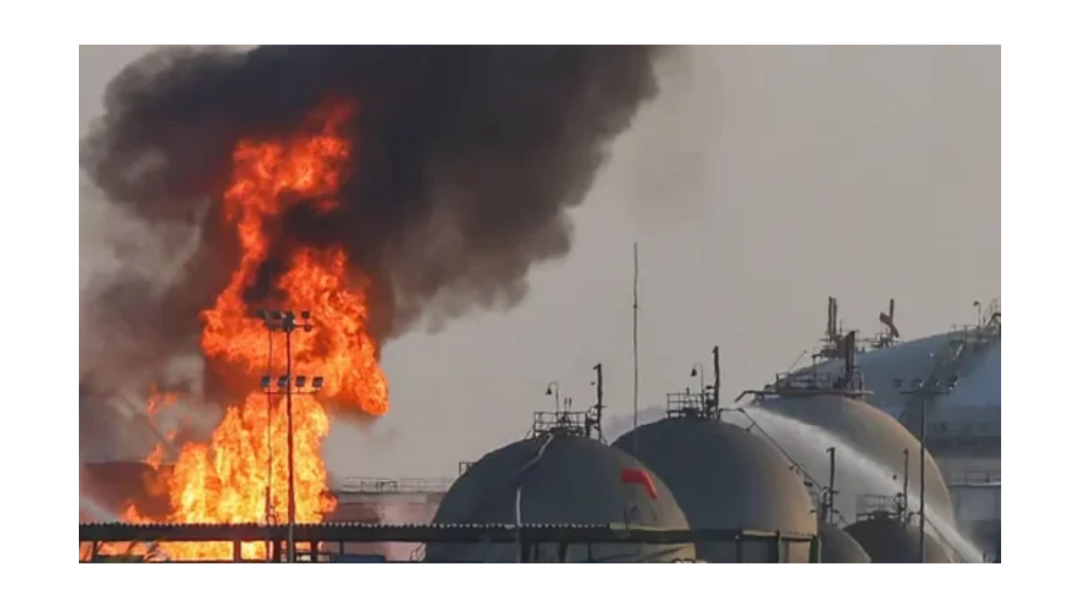
Despite spending tens of billions of dollars a year on defense and possessing advanced US and European fighter jets and missile defense systems, Saudi Arabia is struggling to stop drone and missile attacks by Yemen’s Houthi rebels. A deadly attack on Riyadh’s main airport last week has intensified questions over why Saudi airspace remains vulnerable despite such massive investment.
According to the Stockholm International Peace Research Institute, Saudi Arabia spent $83 billion on defense last year, placing Riyadh among the world’s top 10 military spenders. The country possesses US-made Patriot and THAAD systems, advanced fighter jets and a range of British- and French-made weaponry. Yet protecting numerous critical sites—including oil facilities, airports and pipelines scattered across its vast desert territory—has become increasingly difficult.
Threats From Three Directions
According to Saudi security analysts, Riyadh now faces potential attacks from three directions: Iran to the east, Yemen’s Houthis to the south and Iran-backed armed groups in Iraq to the north.
Various reports have said Iran launched around 1,000 missiles and drones during the most intense phase of this year’s conflict. Iraqi groups have carried out drone attacks on Saudi Arabia’s east-west oil pipeline, while the Houthis regularly launch missiles from Yemen’s mountainous regions or using mobile launchers.
There is very little time to detect incoming aerial threats, determine which ones need to be intercepted and warn the public. Saudi sources claim most attacks are successfully intercepted, but with so many potential targets to defend, some missiles are penetrating the defensive shield and striking their targets. This has forced Riyadh to make difficult decisions about where to deploy its defense systems.
Houthis Increase Pressure With Changing Tactics
The Houthis are now using ballistic missiles, cruise missiles and long-range drones simultaneously. Military experts say the tactic of launching weapons traveling at different speeds and altitudes at the same time is designed to overwhelm and confuse air defenses, resembling tactics used by Russia in its attacks on Ukraine.
Low-flying cruise missiles can be difficult for radar systems to detect. The Houthis also claim to possess ballistic missiles capable of changing trajectory during flight. Experts say the designs of their Hatem-2 and Palestine-2 missiles bear similarities to Iranian weapons.
Last year, a Houthi missile fired from nearly 2,000 kilometers away struck near Israel’s Ben Gurion Airport, prompting discussion about the weapon’s accuracy. A spokesperson for Yemen’s government forces has also claimed that the Houthis are modifying Iranian-made air defense systems for offensive use.
War or Negotiations: Riyadh Faces a Dilemma
The Houthis have long been regarded as part of the Iran-led so-called “Axis of Resistance.” Although Hezbollah and Hamas have been weakened by recent conflicts, the Houthis have maintained a strong position.
Against the backdrop of the humanitarian catastrophe and blockade in Yemen during the Saudi-Houthi war from 2015 to 2022, the Houthis threatened Saudi ships in the Red Sea last July. Attacks on Aramco oil refineries and air bases followed. The Houthis are demanding an end to Saudi airstrikes in Yemen and several billion dollars in compensation.
Meanwhile, Riyadh has sought to project a sense of normalcy. Last week, civil defense authorities suspended automated mobile alerts for missile attacks. The alerts were reinstated after the airport was attacked shortly afterward. Saudi authorities said on Monday that they had intercepted three ballistic missiles.
Saudi Arabia Seeks International Support
Saudi Arabia is seeking international assistance to manage the situation. Pakistan has deployed several thousand troops, while Egypt has pledged support.
However, US weapons stockpiles are also under pressure. A US Defense Department report said operations against Iran had depleted stocks of strategic weapons. With midterm elections approaching, President Donald Trump has also adopted a cautious stance toward becoming involved in another Middle East conflict. He has not made a clear commitment to direct strikes against the Houthis.
Analysts say Saudi Arabia now faces two difficult paths: further strengthen its defenses and risk prolonging the conflict, or seek a sustainable solution through a political settlement.







Design & Devlopment : Ifad Technology


