

Today is January 24, the historic day of the People’s Uprising. The People’s Uprising of ’69 is a historic event in the history of the long freedom struggle of Bengal under the undisputed leadership of the greatest Bengali father of the nation, Bangabandhu Sheikh Mujibur Rahman. Father of the Nation Bangabandhu Sheikh Mujibur Rahman proclaimed the Charter of Liberation of Bengali, containing the ideology of the 6-point mass movement, on the path of progressive struggle, on January 4, 1969, the leaders of the progressive student organizations including the Chhatra League, the student union formed the Central Student Struggle Council and announced 11-point demands. The main basis of this 11-point demand was the 6-point declared by Bangabandhu.
The 6-point 11-point demand includes the problem-oriented demands of the students as well as the demands related to the interests of farmers and workers.
One of the main demands of this movement was the withdrawal of the Agartala conspiracy case and the release of the royal prisoners including Bangabandhu Sheikh Mujibur Rahman. The popular uprising of 1969 took place in the context of the 6-point and later the 11-point program. On January 17, 1969, when student leaders called for a nationwide strike in all educational institutions, the then Governor of East Pakistan, Monem Khan, issued Section 144 to suppress the student movement. In protest against the government oppression, the program of student assembly and protest march was taken at Battala of Dhaka University on January 20. The movement intensified when the student leader Amanullah Mohammad Asaduzzaman (Assad) was killed by the police in this procession. After the martyrdom of Assad, the spontaneous participation of people from all walks of life on January 21, 22 and 23 led to an unprecedented mass uprising on January 24.
On January 24, 1969, with the aim of overthrowing the Pakistani military regime, the struggling masses took out a march against the repression of the ruling group and breaking the dusk law. Nineth grade students of Navkumar Institute, Kishore Matiur Rahman and Rustom were martyred on the street in front of the secretariat in Dhaka when the police fired at the procession. In protest, the struggling crowd set fire to the secretariat that day. Angry people set fire to the homes of Ayub-Monem clique brokers, ministers, MPs and the offices of then dailies Pakistan and Pakistan Observer, known as their mouthpieces. The situation in Dhaka went beyond the government’s control.
Then on February 15, when Sergeant Zahurul Haque, accused in the Agartala conspiracy case, was killed in Dhaka Cantonment, the people of Bengal became protestors. On February 18, the proctor of Rajshahi University Dr. When Shamsujjoha was killed, students and crowds came to the streets, ignoring the curfew. Dictator Ayub Khan was forced to release Bangabandhu Sheikh Mujib and the accused in the Agartala conspiracy case and 34 leaders detained under the Security Act under the pressure of the popular uprising. On February 23, in the presence of millions of people, the undisputed leader of Bengali Sheikh Mujibur Rahman was awarded the title of Bangabandhu by the Central Student Struggle Parishad.
The military dictator Ayub Khan was overthrown in a popular uprising in 1969. Since then, 24th January has been celebrated as People’s Uprising Day.
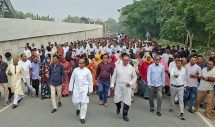
Bangladesh Awami League will pay tribute at the memorial of Shaheed Matiur Rahman at Navkumar Institute premises in Bakshibazar of the capital on the occasion of the historic People’s Uprising Day on Wednesday at 9 am. General Secretary of Bangladesh Awami League Obaidul Quader MP requested all concerned to participate in the program.



Design & Devlopment : Ifad Technology


