

Today is 25 March, Genocide Day. At the end of this day in 1971, a terrible night came in the life of the Bengali nation. At midnight on this day, the barbaric Pakistani invasion forces armed with sophisticated weapons attacked the unarmed Bengalis all over the country, including the capital Dhaka, with the heinous aim of silencing the voice of the Bengali nation forever, according to their pre-planned Operation Search Light blueprint.
On March 25, 1971, the Pakistani invasion forces started the genocide in an attempt to wipe out the Bengali desire for independence. Then came the independence of Bangladesh through nine months of armed war. Operation Searchlight was the name of Operation Searchlight, which was carried out by the Pakistani military to wipe out the Bengali nation on the night of March 25, 1971.
Two Pakistani military officers, Major General Khadim Hussain Raja and Major General Rao Farman Ali, made the guidelines for this operation. No written record of instructions was kept. The whole order of mass killing was communicated orally to the formation commander or the concerned persons. Much later, in 2012, Major General Khadim Hussain Raza published his autobiography titled ‘A Stranger in My Own Country’. The autobiography, published by Oxford University Press, revealed some information about Operation Searchlight for the first time.
Reminiscing about how Operation Searchlight was planned in 1971, Raja wrote, ‘March 17, around 10 am. Tikka Khan sent me and Major General Farman to the command house to meet him. After getting the news we both met Tikka Khan. Go and see, General Abdul Hamid Khan is also there. Tikka Khan told us that Sheikh Mujib’s reconciliation talks with the President are not moving in a positive direction. The President wants us to prepare for military operations and make a plan accordingly. Apart from this, we have not received any verbal or written instructions. We were told that on the afternoon of March 18, the two of us should discuss with the high-ranking officials and finalize the plan. The next morning, Khadim Hossain Raja sat in his office with Rao Farman Ali. They named this campaign of genocide Operation Searchlight.
American journalist Robert Payne wrote about the night of March 25, “That night 7000 people were killed, 3000 more people were arrested.” The incident in Dhaka had just begun. After that, the soldiers continued to increase the death toll all over East Pakistan. Houses and shops started burning. Looting and destruction have become their addiction. Dead bodies lying on the streets became food for crows and foxes. All of Bangladesh has become a cremation ground haunted by vultures.
The recognition of this wholesale genocide is also in the documents published by the government of Pakistan itself. The white paper published by the Pakistan government during the liberation war about the crisis in East Pakistan states, “More than 100,000 people lost their lives from March 1, 1971 to the night of March 25, 1971.”
In the process of de-escalating the political deadlock caused by the failure of the Pakistani junta to hand over power to the Awami League despite winning a majority in the 1970 general elections, the Pakistani army launched the infamous ‘Operation Search Light’ massacre of innocent Bengali civilians. The main aim of their campaign was to indiscriminately kill all conscious citizens including the progressive political leaders and activists of the then East Pakistan including Awami League.
After noon on this day, the situation started to prevail all over the country including Dhaka. Since the morning, the activity of the army officers was visible. They visited different cantonments of the country by helicopter and returned to Dhaka cantonment in the afternoon.
The 22nd Baloch Regiment stationed at Pilkhana, the headquarters of the EPR in Dhaka, can be seen taking up positions at various places in Pilkhana. Pakistani troops attacked Pilkhana, Rajarbagh, Neelkhet at midnight. The invading forces occupied the university area including Nilkhet through tanks and mortars. The night of the city turned terrifying with army machine-gun fire, tank-mortar fire and flames.
An account of this is also available in the book ‘Witness to Surrender’ by Siddiq Salik, who was the Public Relations Officer of Lt Gen Tikka Khan and Lt Gen AAK Niazi. Siddique Salik was by the side of General Niazi during the liberation war of Bangladesh. As a loyal Pakistani, he has seen closely the plot of the Pakistani military junta against the people of Bangladesh. On March 25, he wrote about the start of Operation Searchlight: “Military operations begin before the specified time. Until the appointed moment (H-hour) of such a blow, the sign of immobility disappeared. The gates of hell were opened.
The students of Rokeya Hall were not saved from the Pakistani hyenas. Dr. Govinda Chandra Dev and Jyotirmay Guha Thakurta, Professor Santosh Bhattacharya, Dr. 9 teachers of various departments of the university including Moniruzzaman were brutally killed. The biggest incident of brutal murder happened in Jagannath Hall of DU. Here the slaughter goes on from night to morning.
President Yahya Khan secretly left Dhaka and went to Karachi after finalizing all the steps to implement the Operation Searchlight plan. At the beginning of the army operation, the invading forces arrested Bangabandhu Sheikh Mujibur Rahman, the undisputed leader of the Bengali nation, from his residence in Dhanmondi. Before his arrest, Bangabandhu declared the independence of Bangladesh on March 26 (midnight of March 25) and called for resistance against the enemy at any cost.
Responding to this call of Bangabandhu, the Bengalis jumped into the war against the Pakistani invaders and achieved complete victory on December 16, 1971 after a long 9-month armed struggle. The new state of Bangladesh appeared on the world map.
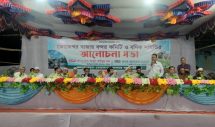
Various programs have been taken at the national level to celebrate the day with due dignity. On this occasion, a symbolic ‘black out’ will be observed across the country from 11 to 11:31 tomorrow night. However, KPIs and emergency installations will remain exempt from this programme. On the occasion of the day, President Md. Sahabuddin and Prime Minister Sheikh Hasina will deliver the message. On this day, a discussion meeting on Genocide Day was organized at the Liberation War Museum around 10:30 am.
Musical theater and cultural programs will be organized across the country on genocide and liberation war. All educational institutions including schools, colleges, madrasas will hold a commemoration and discussion meeting on March 25 in the voice of prominent people and brave freedom fighters. Rare photographs and documentaries on the genocide will be circulated in all city corporations including Dhaka. In addition, special prayers will be offered in all mosques and other places of worship on this day except at Zohar or at convenient times to seek forgiveness for the souls of those killed on the night of March 25, 1971. The same program will be held at the district and upazila levels and Bangladesh embassies abroad to highlight the significance of the day.



Design & Devlopment : Ifad Technology


