

BNP Standing Committee member Salahuddin Ahmed has raised questions about the political and historical necessity of the July Declaration, five and a half months after the student-led uprising. Speaking to reporters after attending an all-party meeting convened by the Chief Adviser, Salahuddin shared his views on the matter.
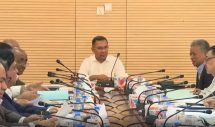
The meeting, part of preparations for drafting the July Declaration, was held at the Foreign Service Academy in the capital and began at 4:30 PM. Salahuddin represented the BNP at the event.
Salahuddin said, “We have urged the advisers to ensure that the political unity formed after the fall of the fascist regime remains intact.” Highlighting the importance of maintaining anti-fascist national unity, he remarked, “The national unity forged during the July-August uprising against fascism must be transformed into a public consensus. Politically, we must promote cultural practices, bring this unity into our political culture, and ensure its preservation to advance the nation. This is our greatest challenge now.”
He further stated, “As part of this effort, we want to deliver an inclusive political statement with all parties involved in the anti-fascist movement. It is crucial to remain vigilant so that fascist forces and their collaborators do not sow seeds of discord within us.”
Commenting on the meeting, Salahuddin noted, “We attended the meeting at the Chief Adviser’s invitation, engaged in discussions, and provided necessary suggestions regarding governance and other issues.”
When asked whether specific recommendations were made regarding the declaration, he replied, “There was some discussion about the July Uprising Declaration. Leaders of various political parties shared their advisory opinions.” He added, “We questioned the necessity of the declaration five and a half months after the July Uprising. If it is deemed necessary, its political, historical, and legal significance must be clearly determined.”
The BNP leader emphasized that the declaration should not create divisions within the anti-fascist coalition, stressing, “If this document holds political or historical importance, we will certainly honor it. However, its drafting must include input from all relevant stakeholders. We have conveyed this suggestion.”
Salahuddin further urged the Chief Adviser and other advisers to take steps to prevent any fractures in national unity or misunderstandings within the coalition, stating, “I requested that they monitor the matter closely and act accordingly to avoid any potential disruptions to our unity.”
When asked about BNP’s position on the July Declaration, he remarked, “We have provided our input on various political documents.” However, he refrained from commenting on whether the party had any objections to the draft.
The all-party meeting was attended by representatives from several political groups, including a four-member delegation led by Jamaat-e-Islami Secretary General Mia Golam Parwar; Zonayed Saki, chief coordinator of the Gono Songhoti Andolon; Nurul Haque Nur, president of the Gono Odhikar Parishad and former DUCSU VP; and Asaduzzaman Fuad, general secretary of the Amar Bangladesh (AB) Party. Also present were Muhammad Nasiruddin Patwary, convener of the National Citizen Committee, and its member secretary Akhtar Hossain; Arif Sohel, member secretary of the Anti-Discrimination Student Movement, and the organization’s chief organizer Abdul Hannan Masud.
Other attendees included a three-member delegation led by Ahmad Abdul Kader, secretary general of Khelafat Majlis; a two-member team led by Gazi Ataur Rahman, joint secretary general of Islami Andolon; Hasnat Kaiyum, chief coordinator of the State Reform Movement; Shahid Uddin Mahmud Swapan, general secretary of Jatiya Samajtantrik Dal-JSD; Masud Rana, coordinator of the Socialist Party of Bangladesh (Marxist); and Kamruzzaman of the National People’s Front.







Design & Devlopment : Ifad Technology


