
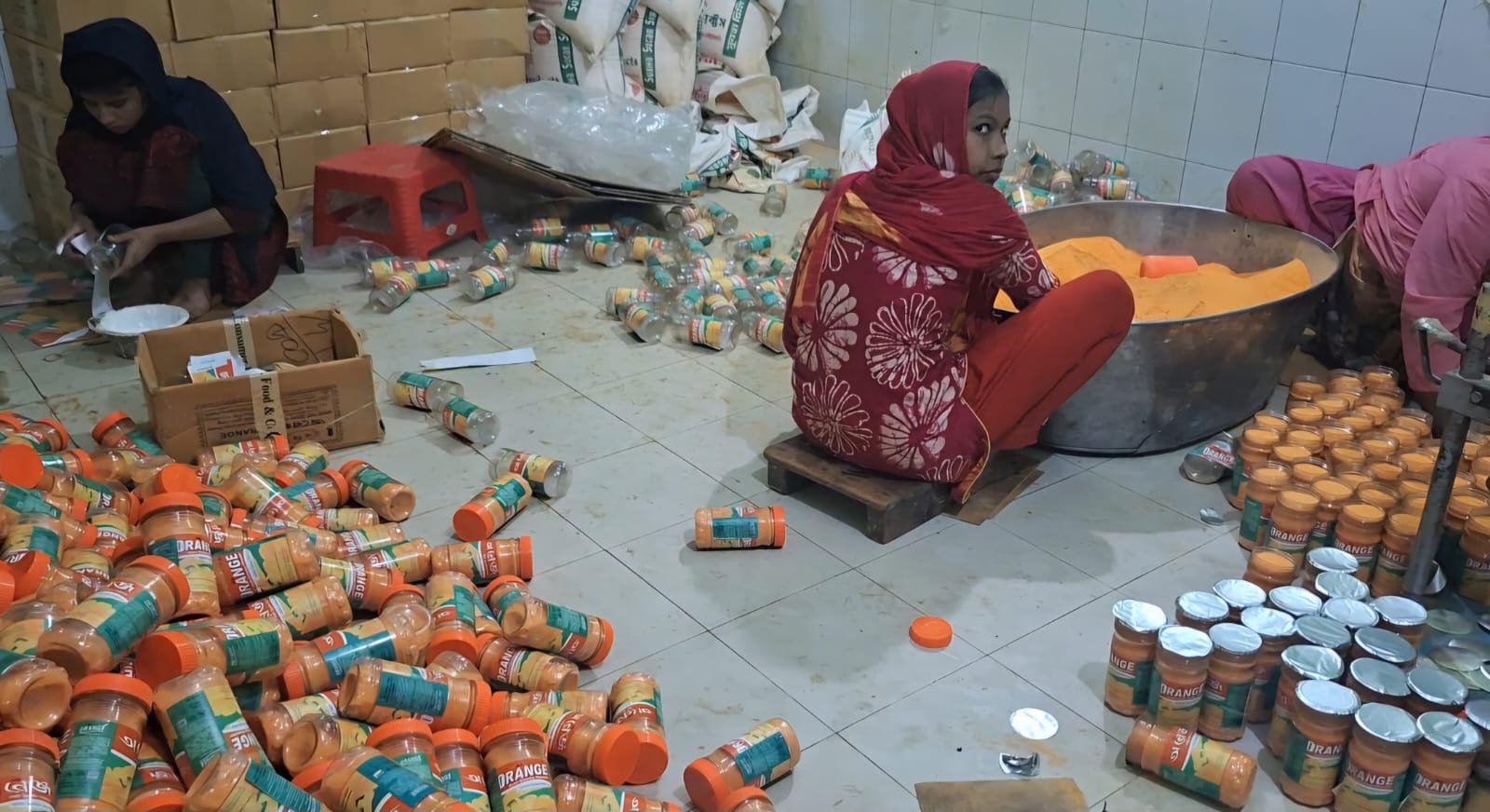
Targeting the holy month of Ramadan, counterfeit Tang, juices, and glucose drinks are being manufactured in makeshift setups in Jinjira. The administration appears to be turning a blind eye to the issue. Some unscrupulous traders, driven by the lure of higher profits, are supplying fake and adulterated food products to various districts across the country. Consumers at the grassroots level are being deceived into purchasing these counterfeit goods, while simultaneously being exposed to serious health risks. According to doctors, such adulterated products increase the risk of cancer in the stomach and lungs. In areas like Jinjira, Mandail, Amirabag, Borhanibag, Shubhadda, Aganagar, Kaliganj, and Kazirgaon in Keraniganj, Dhaka, counterfeit and adulterated orange and mango drink powders (labeled as Tang) as well as imitation chocolates resembling popular brands like KitKat and Mimi are being produced and sold in preparation for Ramadan.
In the past, mobile courts operated by RAB had successfully shut down these illicit food production units. However, following the regime change on August 5, RAB’s mobile court operations have been suspended, allowing dishonest traders to resume their activities with renewed vigor. On-the-ground investigations in adjacent areas of Keraniganj Upazila, including Gadabag, Muktirbag, Amirabag, Nekrojbag, Kholamora Jianagar, Tegharia, Shubhadda, Aganagar, Kaliganj, Kazirgaon, and Abdullahpur, revealed that counterfeit and adulterated food items, including products marketed for children, are being produced in unhygienic conditions and cleverly distributed to markets.
During a visit to a factory in Muktirbag, it was observed that several female workers were bottling these fake and adulterated products by hand. Without wearing gloves or head caps, they were filling bottles with orange drink powder. The powder was scattering into the air, forcing the workers to operate without fans to minimize dispersal. This led to the workers sweating profusely, creating a grimy and unsanitary environment. One female worker was seen filling bottles with the drink powder directly by hand.
In a conversation with the factory manager, Shakil Ahmed, he claimed that they possess certifications from the Bangladesh Standards and Testing Institution (BSTI) and environmental clearance, but he was unable to produce these documents when asked. When inquired about the presence of a laboratory for quality testing, he candidly admitted there was none, stating, “We have recipes, and we prepare the drink powders accordingly. These are then sent to various districts in southern Bangladesh via courier services, after which our sales representatives distribute the products to shops.” When questioned about the potential health hazards posed by these adulterated and artificially colored orange drinks, he dismissed the concerns, saying, “The weather in Bangladesh is very good; everything gets digested here. We’ve been selling these products in the market for years and have never received any bad news.”
Dr. Rozina Amin, Associate Professor at Sir Salimullah Medical College Mitford Hospital, warned that adulterated drinks mixed with artificial colors are extremely harmful to health. “Such drinks primarily damage the liver and kidneys and reduce insulin levels in the body,” she explained. “They are particularly dangerous for young children due to their high sugar content.” She added that during Ramadan, when fasting individuals require proper hydration, homemade juices made from local fruits are a far healthier option.
Shahidur Rahman, a sanitary inspector at Keraniganj Upazila Health Complex, stated, “We have received reports that unscrupulous traders have rented flats in various parts of the upazila to set up illegal factories producing orange drink powders. To conduct raids on these factories, we need the support of an executive magistrate. We’ve discussed the matter with the Upazila Executive Officer, and as soon as an executive magistrate is assigned, we will launch operations.”
Rinat Fauzia, the Upazila Executive Officer of Keraniganj, emphasized that producing adulterated food items is a serious crime. “We will soon conduct raids on establishments involved in manufacturing counterfeit and adulterated products,” she assured.






Design & Devlopment : Ifad Technology


