
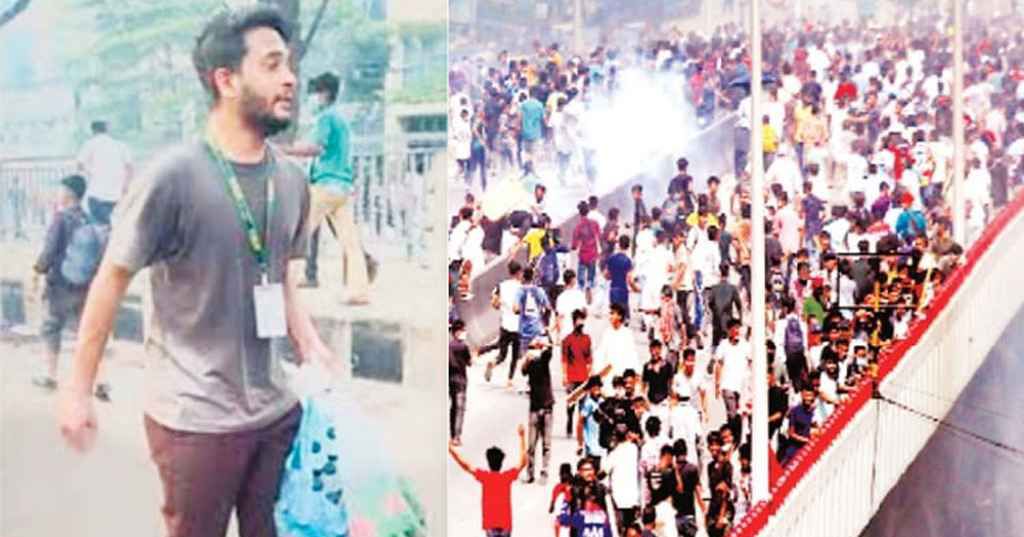
Dhaka, July 18, 2025 — On this day one year ago, Bangladesh witnessed one of the deadliest days of civil unrest in recent memory. The nationwide ‘Complete Shutdown’ called by anti-discrimination student activists demanding reform in the government job quota system spiraled into violence, leaving at least 31 people dead, including 11 students, and injuring nearly 1,500 across the country.
Clashes broke out between protesters, police forces, and ruling party supporters in Dhaka, Chattogram, Narsingdi, Rangpur, Savar, and Madaripur, turning key urban areas into battlegrounds. 24 people were killed in Dhaka alone, while two each died in Chattogram and Narsingdi, and one each in Rangpur, Savar, and Madaripur.
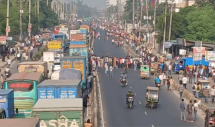
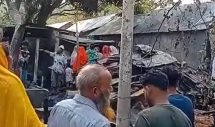
Amid the chaos, protesters set fire to multiple government establishments including the BTV headquarters in Rampura, the Disaster Management Department, Bridge Division offices, and police outposts across the capital. As a result, state-run BTV’s broadcast was suspended, and train operations were halted. Major roads including the Dhaka-Chattogram Highway and several national highways were blocked by demonstrators.
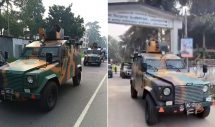
To restore order, the government deployed 229 BGB platoons nationwide and imposed an indefinite ban on public gatherings in Dhaka. Internet access was fully suspended from 9 PM. Dhaka’s Uttara East Police Station was set ablaze during heavy clashes. In Mirpur-10, a police outpost under the metro rail line was torched.
Protesters rejected the government’s call for dialogue. One movement coordinator, Asif Mahmud Sajib Bhuiyan, wrote on Facebook: “You don’t negotiate with bullets. Betrayal of blood is worse than death.” Another coordinator, Nahid Islam, stated: “This violence was provoked by the government. The responsibility is theirs. There can be no talks over the blood of martyrs.”
On the same day, protests and road blockades erupted in at least 47 districts, including major highways in Jessore, Rajbari, Gazipur, Sylhet, Rajshahi, Cox’s Bazar, Rangamati, and Lakshmipur.
Fire service officials reported 25 incidents of arson, including 15 in Dhaka alone. Six buses, two microbuses, 20 motorcycles, multiple government offices, party offices, toll booths, and police stations were damaged or destroyed.
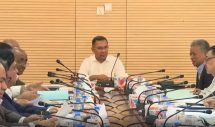
In response to the mounting crisis, the government formed a judicial inquiry commission to investigate the deaths, violence, and alleged acts of sabotage. Over 100 leaders of Bangladesh Chhatra League (BCL) resigned in protest against attacks on students by BCL members. 24 more resigned from various districts.
The UN Secretary-General’s spokesperson Stéphane Dujarric emphasized that “peaceful protest is a fundamental right, and the Government of Bangladesh must protect it.”
Then-State Minister for ICT Zunaid Ahmed Palak defended the internet shutdown as a security measure. Ruling party leaders, including AL General Secretary Obaidul Quader and Foreign Minister Hasan Mahmud, blamed the violence on the BNP-Jamaat alliance, alleging they had hijacked the student movement for political gain.
On July 18, 2024, a generation stood at the crossroads of protest and sacrifice. A year later, the memory of that day continues to haunt the nation as a symbol of unresolved political tension, youth activism, and the price of dissent.

Design & Devlopment : Ifad Technology


