
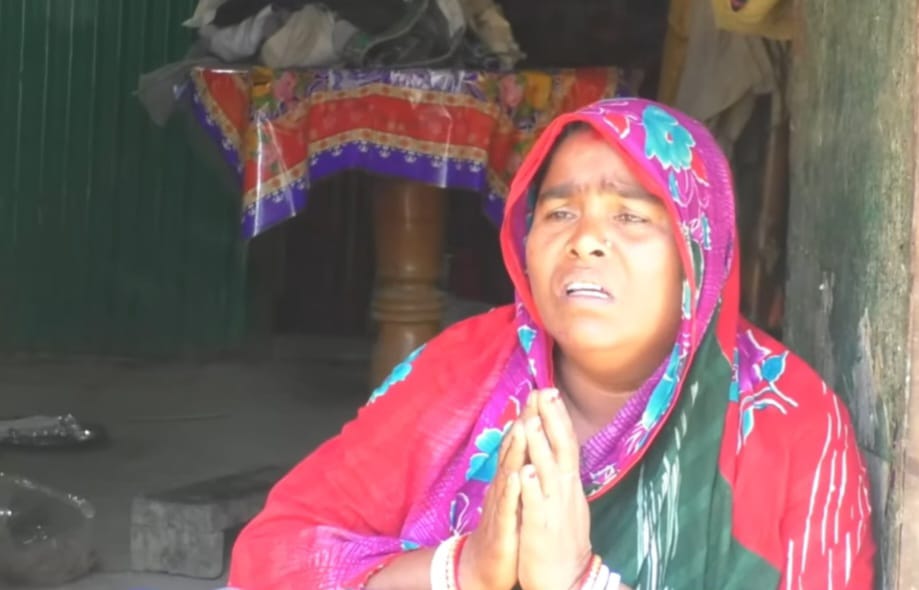
Their lives move forward under constant threat and uncertainty. Their dreams of a secure future are trapped within the confines of security measures. They can neither leave their ancestral lands nor lead a normal life. Even in the midst of this uncertain existence, they continue searching for a path to freedom.
This is the story of the people living near the world’s largest refugee camp—on the border areas of Teknaf and Ukhiya.
These people have no freedom, no citizenship rights, and no means of survival.
Due to ongoing conflict between two armed groups in Myanmar across the border, the residents of this region remain constantly on edge. Bangladeshi citizens have been killed by mortar shells fired from Myanmar, along with Rohingya refugees. Many others along the border have been injured. Farmers are frequently injured or killed in landmine explosions. Schools are closed from time to time. Kidnapping, drug trafficking, human smuggling, and arms dealing have become rampant along the border—making the Bangladesh–Myanmar frontier known globally as one of the most dangerous.
As a result, the Bangladesh government has tightened border security. Ironically, these security measures have turned into a living nightmare for the local citizens. Among them, the lives of around 5,000 fishing families have become unbearable.
Take, for instance, 70-year-old Somopti Das of Jaladas Para in Hnila, Teknaf. Alongside her 96-year-old mother, she used to survive by making fishing nets. But with fishing banned, there is no demand for nets anymore, and the work has come to a halt.
Somopti Das recalled, “Once this fishermen’s village was bustling with trade and business. People from various places used to come here to earn a living. Fresh fish caught from the Naf River and sun-dried fish were supplied across Teknaf, Cox’s Bazar, and beyond. There was no shortage or hardship in our community. But now the whole village feels like a graveyard. No fire burns in the stoves of the fishermen’s homes.”
Fishing has been banned in the Naf River for eight years in the name of security.
It’s not just Somopti Das. Hundreds of families in Hnila’s Jaladas Para are barely surviving, enduring hunger and half-meals.
In one of the shanty houses, sick fisherman Nabi Hossain lies writhing in pain on the floor. His wife Mostofa Khatun says, “We don’t even have money to buy medicine. No fishing means no income.”
The fishing ban was imposed in the Naf River after a massive influx of Rohingya refugees began on August 25, 2017. To control this influx, the Ministry of Home Affairs issued a directive, which included the fishing ban. Even after eight years, that ban has not been lifted. Currently, the Border Guard Bangladesh (BGB) is overseeing enforcement in the river.
Abdul Gani, president of the Jaliapara Small Fishermen’s Cooperative Society, said, “Due to the fishing ban over the last eight years, more than 200 fishing boats and nets—built through investments of millions by fishermen—are going to waste.”
Ali Ahmed, acting chairman of Hnila Union Parishad, said nearly 5,000 fishing families in Teknaf depend on the Naf River. But in the name of security, militarization has deprived them of access to their livelihood for eight long years. “Despite the fishing ban, border crimes have not stopped—in fact, they’ve increased,” he added.
These fishing families are now overwhelmed by poverty and hardship. Having lost their profession, most have become dependent on loans and the mercy of others.
If the government does not intervene, people in Teknaf’s fishing villages will starve to death.
Abu Morshed Chowdhury, president of Cox’s Bazar Civil Society, said, “If life along the border becomes unlivable for Bangladeshi citizens due to security issues, then they must be relocated elsewhere with proper resettlement and income opportunities.”
Sheikh Ehsan Uddin, Upazila Nirbahi Officer (UNO) of Teknaf, said that considering the inhumane living conditions of the fishing families, permission has been granted since August 5 to fish during the daytime in a specific part of the Naf River near Shah Porir Dwip. However, fishing remains banned in all other parts of the river.





Design & Devlopment : Ifad Technology


