
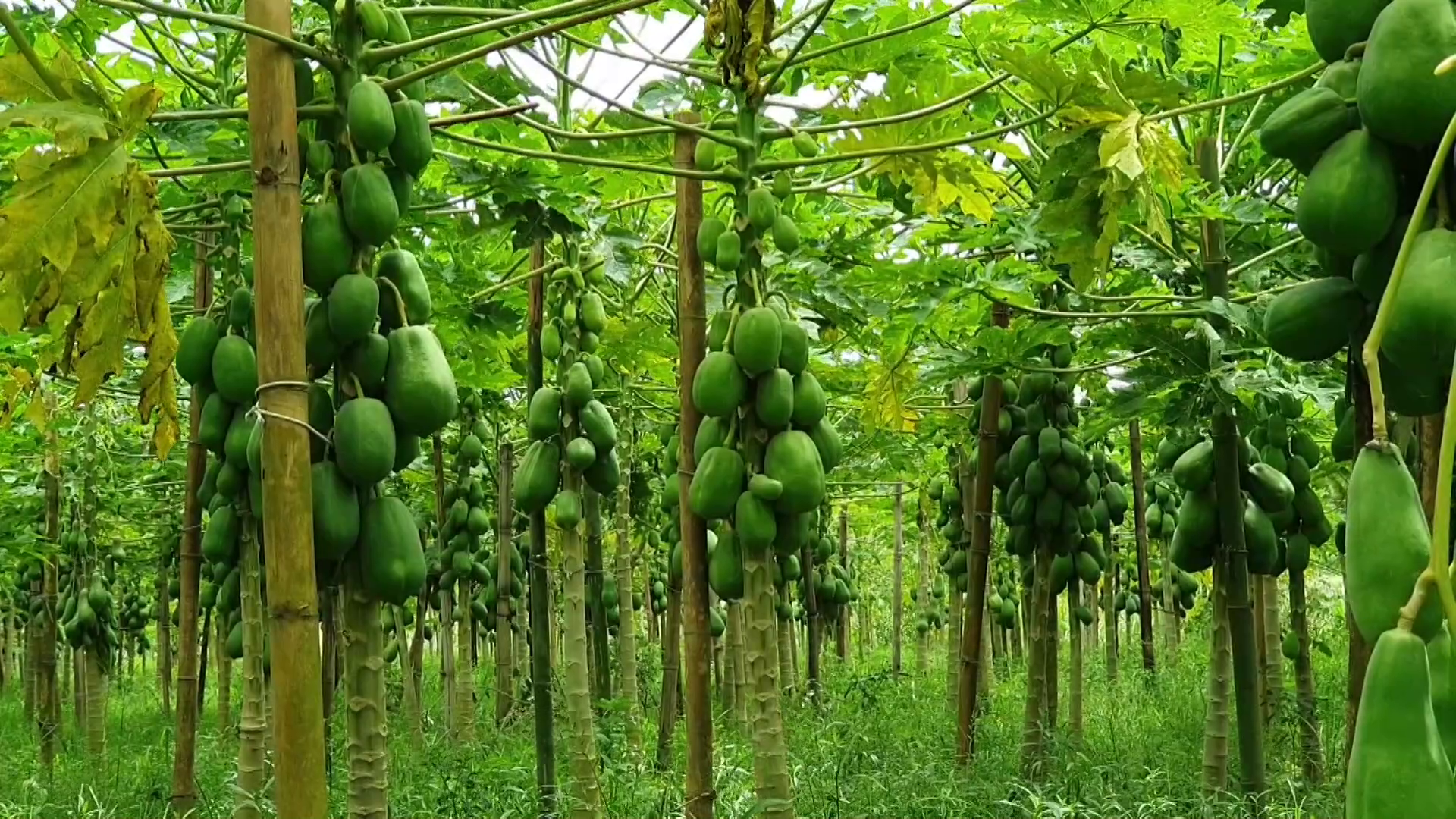
Papaya cultivation is gradually transforming the agricultural landscape of Shariatpur, offering farmers a promising alternative to traditional paddy and jute. Many have shifted to this profitable and high-yield crop, with cultivation expanding rapidly across various parts of the district. Currently, approximately 180 hectares of land in the district—particularly in Jajira upazila—are under papaya cultivation.
According to local farmers, although papaya requires comparatively lower production costs than other crops, this season’s expenses have surged due to unfavorable weather. Inadequate rainfall has led to increased fertilizer usage, raising overall cultivation costs. As a result, farmers are struggling to break even, let alone make a profit, because of the unfair prices they’re receiving.
One farmer remarked, “Both labor and input costs have gone up. But the prices we’re getting from wholesalers barely cover the expenses.”
Most of the papayas are being supplied to Dhaka and other districts. However, poor market infrastructure and the dominance of middlemen are depriving growers of fair profits. Many believe that the lack of price-setting power in the hands of the farmers is a key reason they are not receiving just compensation for their produce.
Commenting on the issue, Md. Riazur Rahman, Additional Deputy Director of the Shariatpur Department of Agricultural Extension, said, “We’re advising farmers on new varieties and technologies to ensure higher yields at lower costs. At the same time, we’re working on strengthening their market connections.”
The agriculture department believes that with improved marketing systems, better transport facilities, and proper price regulation, papaya farming in Shariatpur has the potential to become a profitable and sustainable sector. This promising crop could also play a vital role in boosting the local economy.









Design & Devlopment : Ifad Technology


