
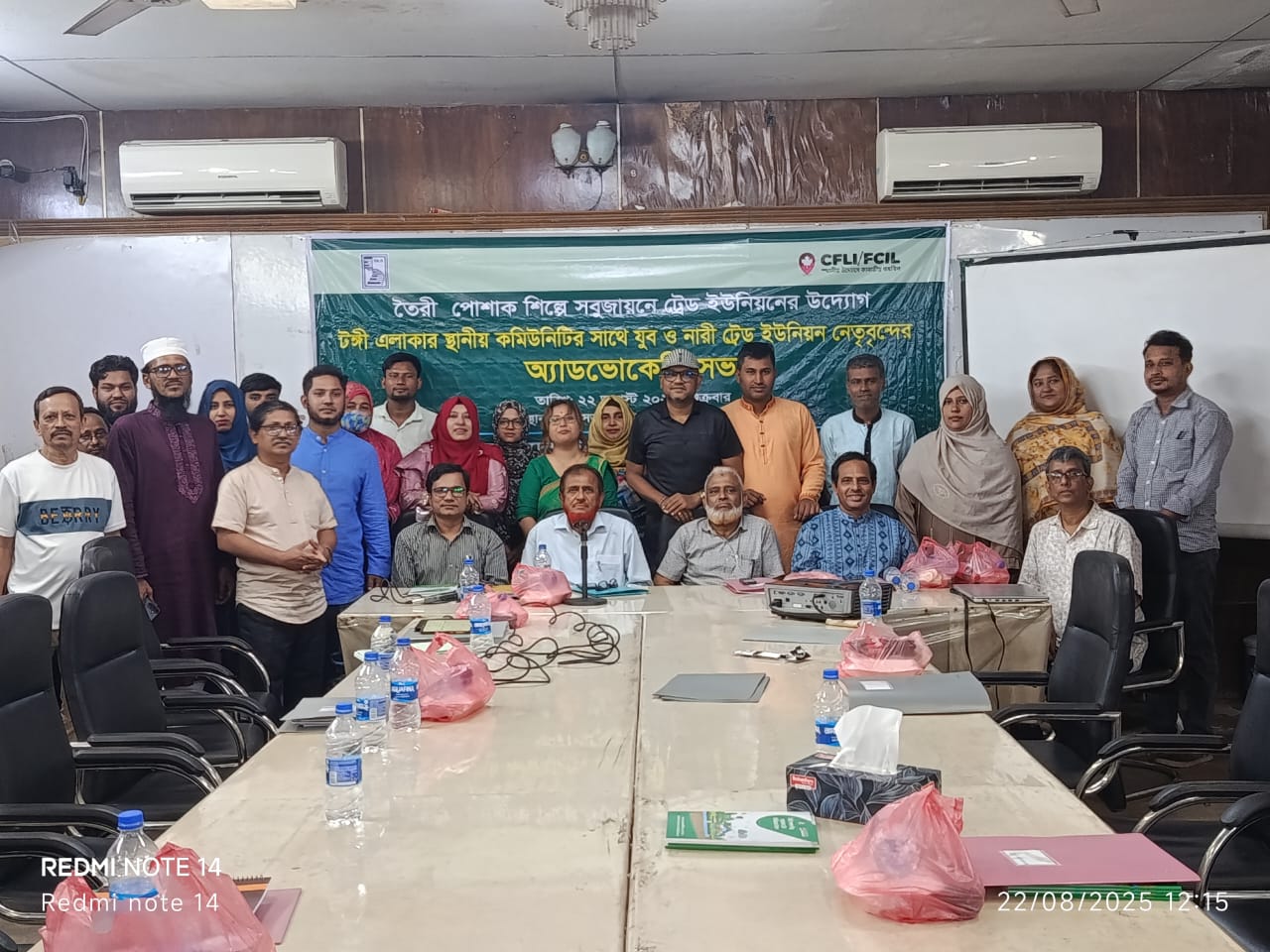
A bilateral meeting was held today (Friday, 22 August 2025) between young trade union organizers and local community representatives in the Tongi garment industry area to ensure environmental and social standards. The meeting was organized by the Bangladesh Institute of Labour Studies (BILS) with the support of the Canada Fund for Local Initiatives (CFLI), and it took place at the Municipality Community Center.
The meeting was chaired by Md. Nurul Amin, General Secretary of the National Workers’ Alliance.
Among those who presented recommendations and opinions were educationist Pradip Debnath, A S M Zakaria, journalist Monsur Ahmed, Alidur Rahman Oli, cultural activist Shekanul Islam Shahi, Shahjahan Shovon, businessman Mahbubur Rahman Jilani, garments representative Shamim Reza, and local government official Atik Shahriar. Also in attendance were teachers from various educational institutions, journalists from local and national media, lawyers, businessmen, religious leaders, house owners, cleaners, and people from different segments of society.
Md. Yusuf Al-Mamun, Deputy Director and Project Coordinator of BILS, highlighted the current climate and environmental situation in Tongi and informed participants about necessary measures. The program was conducted by Project Officer Zakia Begum Nilima, with overall support from social worker Sakhina Akter.
Speakers emphasized that individualism must be set aside and collective efforts must be made to address climate and environmental challenges. They said awareness must be advanced through coordination among trade unions, the community, factory owners, and the government. The initiative would succeed if local communities came forward with a cooperative mindset.
They also pointed out that while industrial development and urbanization are essential for survival, the negative impacts must be mitigated. Alongside work, attention must also be given to social development goals. Factories must strictly follow compliance regulations, and any shortcomings should be addressed proactively, with trade unions playing a leading role.
Speakers further stressed the importance of raising awareness at the individual level to prevent wastage of electricity and water, noting that environmental degradation cannot be reduced if life’s essentials are wasted. They highlighted that negligence in the use of Effluent Treatment Plants (ETP) in factories contributes to pollution, stressing the urgent need for stricter enforcement of laws and greater vigilance.
They also underscored that cleanliness is not only a social duty but also a religious obligation—beginning with personal hygiene at home.
Other recommendations included: enforcing stricter measures against hydraulic horn use, keeping garment factory toilets clean, creating awareness through cultural activists, strengthening the role of municipalities and city corporations in waste management, showcasing positive initiatives through the media, addressing traffic congestion, disposing of polythene and waste responsibly, educating schoolchildren about proper waste disposal, and ensuring effective utilization of foreign aid.









Design & Devlopment : Ifad Technology


