
Bangladesh is a riverine and agriculture-dependent country. Yet, due to its geographical location and the impact of climate change, it has become one of the most vulnerable nations in the world. Every year, thousands of people are affected by cyclones, floods, river erosion, excessive rainfall, or abnormal drought. At the same time, rapid urbanization, industrialization, and population pressure are putting severe strain on the environment. In this context, tree plantation is not merely a ceremonial activity; it is a struggle for survival.
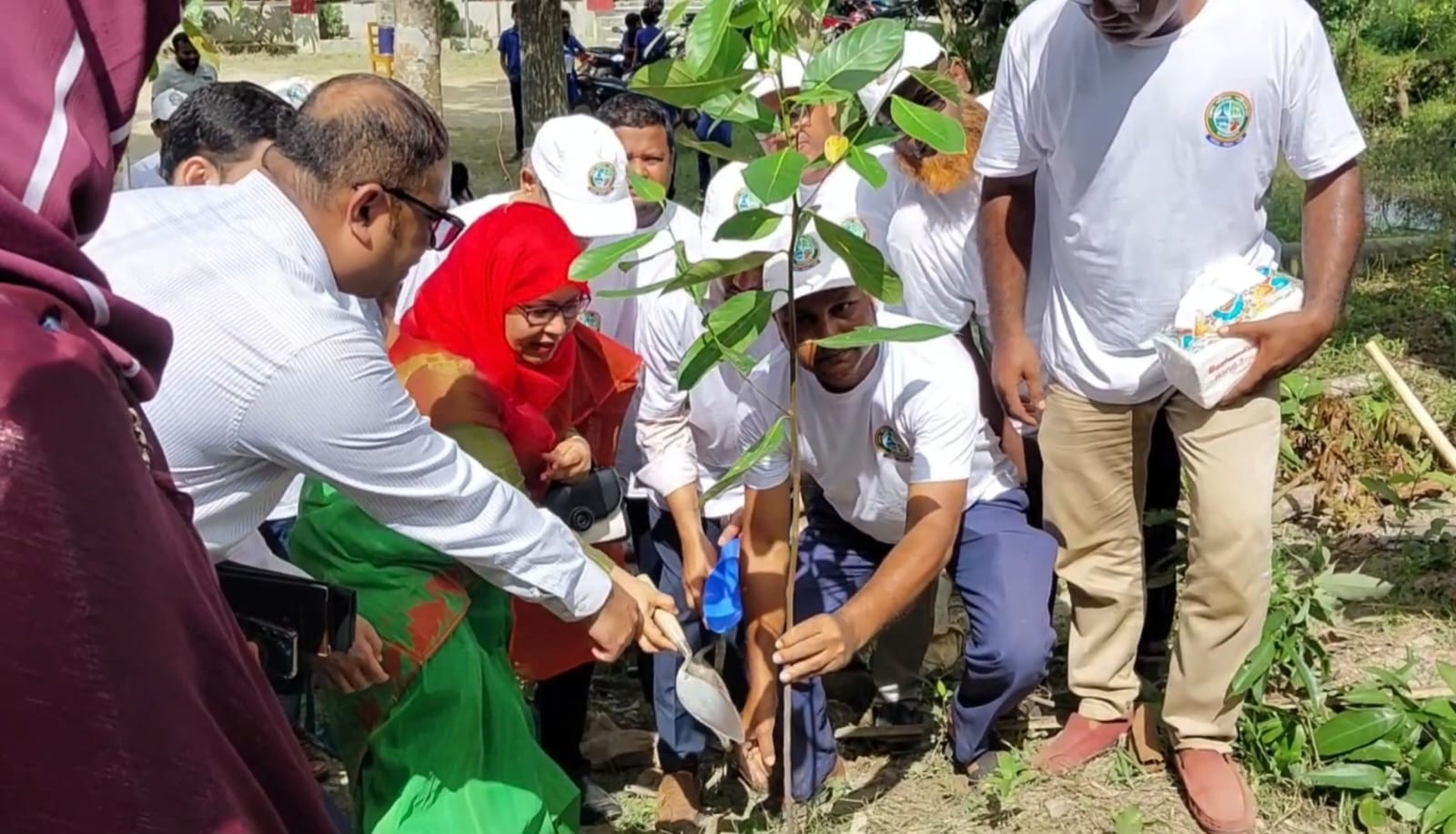
With this reality in mind, the Shariatpur District Council has launched the “Forestry, Fruit-bearing, and Medicinal Tree Plantation Program 2025.” The program was inaugurated by Shariatpur Deputy Commissioner Ms. Tahsina Begum.
On Thursday morning, the initiative was officially launched with the release of doves—symbols of peace—at Deobhog Government Primary School ground, followed by a plantation drive along the Atang-Burirhat road.
At the national level, we often hear commitments to protect the environment. But the real challenge lies in implementing them at the grassroots. The initiative by the Shariatpur District Council and administration demonstrates that with visionary leadership, environmentally sustainable development is indeed possible. Deputy Commissioner Ms. Tahsina Begum did not stop at a ceremonial inauguration; she planted trees with her own hands to inspire the public. Her active presence proved how the responsibility of top-level administration can breathe life into such programs.
On the other hand, the coordinated efforts of Chief Executive Officer of the District Council, Mr. Nazrul Islam, gave the program a solid foundation. If this collaborative approach between administration and public representatives continues, Shariatpur will set an example for other districts to follow.
Under this program, a plan has been adopted to plant 300,000 forestry, fruit-bearing, and medicinal trees across Shariatpur. Although only 25,000 trees will be planted in the first phase this year, it is undoubtedly a major beginning.
Beyond this, the trees will absorb carbon from the atmosphere, aiding in the fight against climate change.
This program will also bring positive impacts to the rural economy. Fruits and timber will generate additional income for local communities. Plantations in educational institutions will nurture a love for nature among students. Roadside plantations will reduce summer heat, making the environment cooler and more pleasant. The spread of greenery in villages will also bring mental peace and harmony.
However, certain challenges must be addressed to make this initiative successful. In the past, many plantation programs have failed due to lack of care after planting. Therefore, this time, the focus should not only be on planting but also on nurturing, protecting, and sustaining the trees. Each sapling should be assigned to a responsible institution or individual. Engaging students can ensure that they view tree care as their personal responsibility.
Moreover, the program should not be treated as a one-time event. Its success will depend on the continuous and phased implementation of the target of 300,000 trees.
The visionary initiative of the Shariatpur District Council and administration certainly deserves national recognition. This is not just a tree plantation campaign—it is a pledge to build a green, safe, and sustainable future for the next generation. Shariatpur has set a shining example of how environmental protection and development can go hand in hand when leadership, planning, and community participation come together at the local level.
If such initiatives are adopted in every district of Bangladesh, one day our country will truly transform into a greener and climate-resilient Bangladesh.
✍️ Author: Shahidul Islam Pilot
Senior Journalist & Columnist.
Date: 5 September 2025









Design & Devlopment : Ifad Technology


