
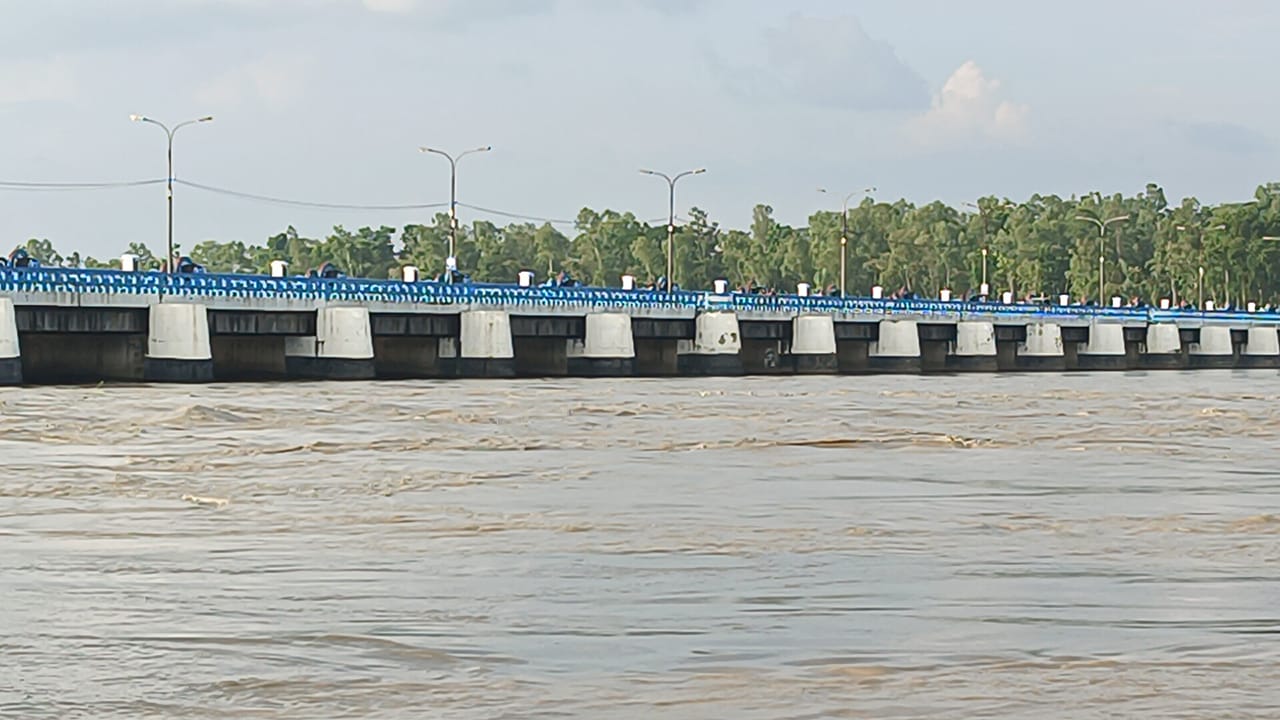
In Lalmonirhat, the Teesta River is swelling as the day progresses. Continuous rainfall and mountain runoff from upstream are driving the water level upward, now flowing 9 centimeters below the danger mark. This threatens to bring a fourth round of flooding to communities along the Teesta. From India’s Jalpaiguri and Cooch Behar through Mekhliganj to Bangladesh’s Lalmonirhat and Rangpur, the swift-flowing river has surged.
Between 6 a.m. and 3 p.m. on Sunday, the water at the Teesta Barrage point in Dalia, Hatibandha Upazila, rose 13 centimeters in nine hours, reaching 9 centimeters below the danger level of 52.06 meters, and it continues to rise. Officials from the Water Development Board have opened all 44 sluice gates of the barrage and begun close monitoring, warning that the river could cross the danger mark at any time.
Bangladesh’s Flood Forecasting and Warning Centre has cautioned that the Teesta water level may keep rising over the next 24 hours and could exceed the danger line, causing general flooding in the Teesta basin. Low-lying and char (river island) areas of the five upazilas in Lalmonirhat District face a significant risk of inundation.
The swelling river has worried farmers living in these lowlands and char villages. Many had replanted aman rice seedlings after their earlier crops were damaged during three floods in August. Another flood could leave these farming families destitute. Nurul Islam, in charge of the Teesta Barrage control room, reported that at 3 p.m. Sunday the river was still flowing 9 centimeters below the danger mark at the Dalia point and urged riverside residents to remain alert.
Shunil Kumar, Executive Engineer of the Water Development Board in Lalmonirhat, said that heavy rainfall and upstream flow continue to raise the river level. He confirmed that at 3 p.m. Sunday the Teesta at Dalia was 9 centimeters below the danger mark and warned that low-lying areas along the river may flood. Authorities are monitoring the situation around the clock.









Design & Devlopment : Ifad Technology


