
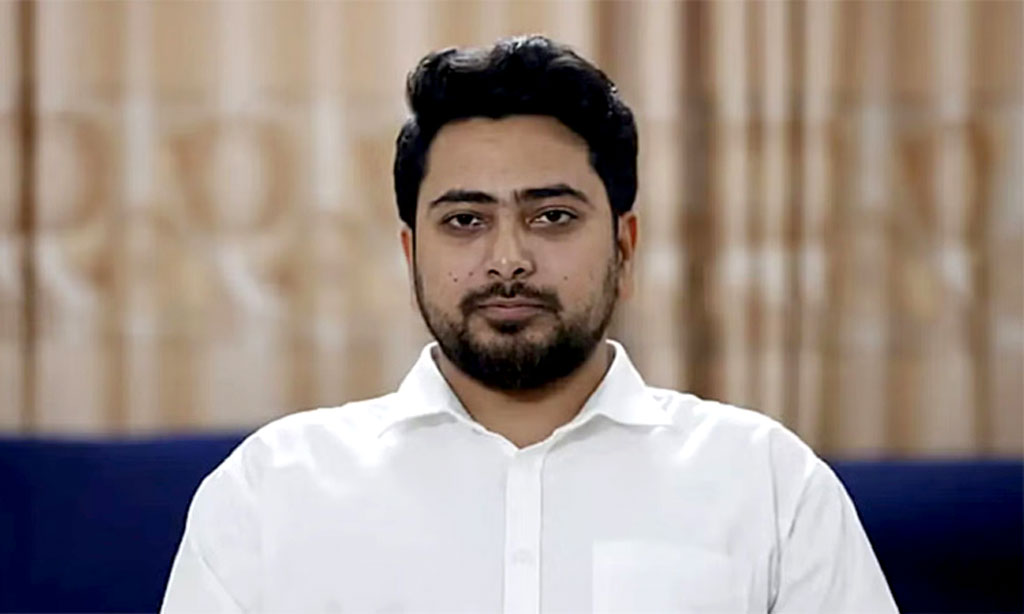
Former Information Adviser to the Interim Government and Convener of the National Citizen Party (NCP) Nahid Islam has accused several members of the advisory council of betrayal. In an interview with a private television channel on Sunday (October 5), he alleged that many advisers maintained secret communication with political parties and are now seeking a “safe exit.”
His comments have sparked intense reactions on social media. Facebook has been flooded with video clips and photo cards of his interview, where netizens are expressing sharply divided opinions.
In the interview, Nahid Islam said, “It was a big mistake to trust many of those we made advisers. We should have strengthened the student leadership and moved forward collectively into the government.” He added, “The trust we had in civil society and political parties has been broken. We have been deceived.”
He claimed, “Several advisers served their own interests, and some betrayed the popular uprising. Their names will be revealed when the time comes.”
According to Nahid, this deviation occurred because the advisers failed to properly assess the power of the mass uprising. “Those who sacrificed their lives and were injured on the streets were the real employers,” he said. “Had the advisers understood that, this deviation would not have occurred.”
Nahid Islam, one of the coordinators of the anti-discrimination student movement in July 2025, played a leading role in the mass uprising. Afterward, he became Information Adviser but resigned in February to assume leadership of the NCP. Two other student leaders, Mahfuz Alam and Asif Mahmud Sajib Bhuiyan, still hold adviser positions.
When asked about student leaders accepting advisory roles, Nahid said, “None of them wanted to be advisers. Their main demand was to form a national government.” He argued, “Had political parties agreed, a citizen-led government would have been established, and students would not have had to shoulder that responsibility.”
He added, “This government would not have survived even three months without the strength of the uprising behind it. Counterrevolutionary attempts were made in the first six months and are still continuing to some extent. We had to take responsibility out of necessity.”
Expressing regret over not forming a government with representatives of civil society, Nahid said, “On August 5, it was the political leaders—not the students—who bowed in the cantonment.”
Responding to allegations that student leaders have become wealthy, he said, “Such accusations have always been made against us. The corruption and extortion by student wings of other political parties should also be investigated. We have not received media support.”
He firmly stated, “Let there be an inquiry into our assets and finances. At the same time, investigate how much money political leaders have earned over the past year and how they have placed their people in the administration and universities.”
When asked whether student leaders will fade away after an elected government takes power, Nahid replied, “We knew this struggle would be long and challenging when we took to the streets. The National Citizen Party was not formed with electoral ambitions but with the vision of transforming Bangladesh’s political culture.”









Design & Devlopment : Ifad Technology


