
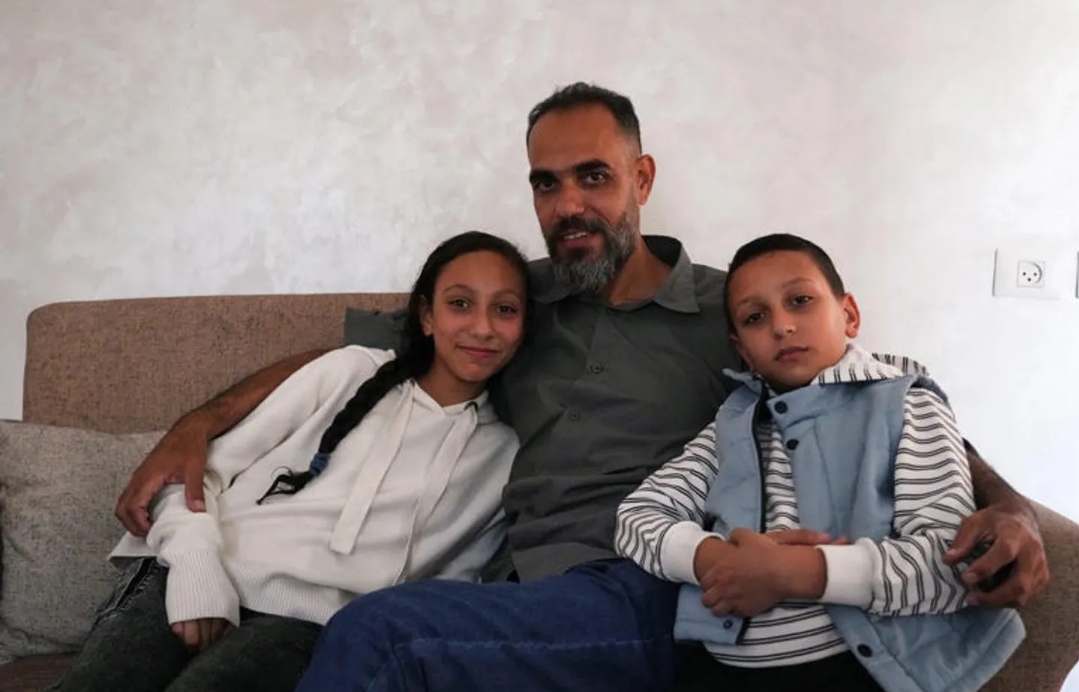
After 20 months in detention, 45-year-old medical technician Mohammad Abu Musa was freed through a prisoner exchange deal in Gaza. Returning home, he found that his mother, sister, and several relatives had been killed in airstrikes, while war-torn Gaza had turned into ruins. Though he embraced his wife and children upon release, his eyes reflected only grief, loss, and the haunting memories of imprisonment.
In an interview with TRT World, Abu Musa said he had been detained without charge and was brutally beaten during interrogations. “They treated us like animals,” he said.
Detainees taken from checkpoints had their hands tied with zip-ties for up to three days without access to water or toilets. “We all soiled our clothes,” Musa recalled.
At Israel’s Sde Teiman detention camp in the south, he was forced to kneel for two months. Beatings broke his ribs. When later transferred to Negev prison, the torture lessened slightly, but living conditions remained inhumane. Inmates suffered from mite infestations that caused constant itching, yet no medicine or treatment was provided.
“People rubbed their bodies against the walls to relieve the itching,” he said. Prisoners were not allowed to change clothes, and their filthy bedding was never cleaned. If they tried to cover themselves with a blanket after washing their only garment, guards would confiscate it.
Inmates received no medical care, leading to deaths such as that of Mohammad al-Astal, who suffered from a colon blockage. An autopsy on a 17-year-old Palestinian detainee showed he was malnourished and had colitis and scabies.
Israeli prison authorities denied all allegations, claiming that facilities are operated according to law. However, a United Nations report stated that at least 75 Palestinian detainees have died in Israeli prisons and detention centers during the ongoing war, due to torture and inhumane conditions.






Design & Devlopment : Ifad Technology


