
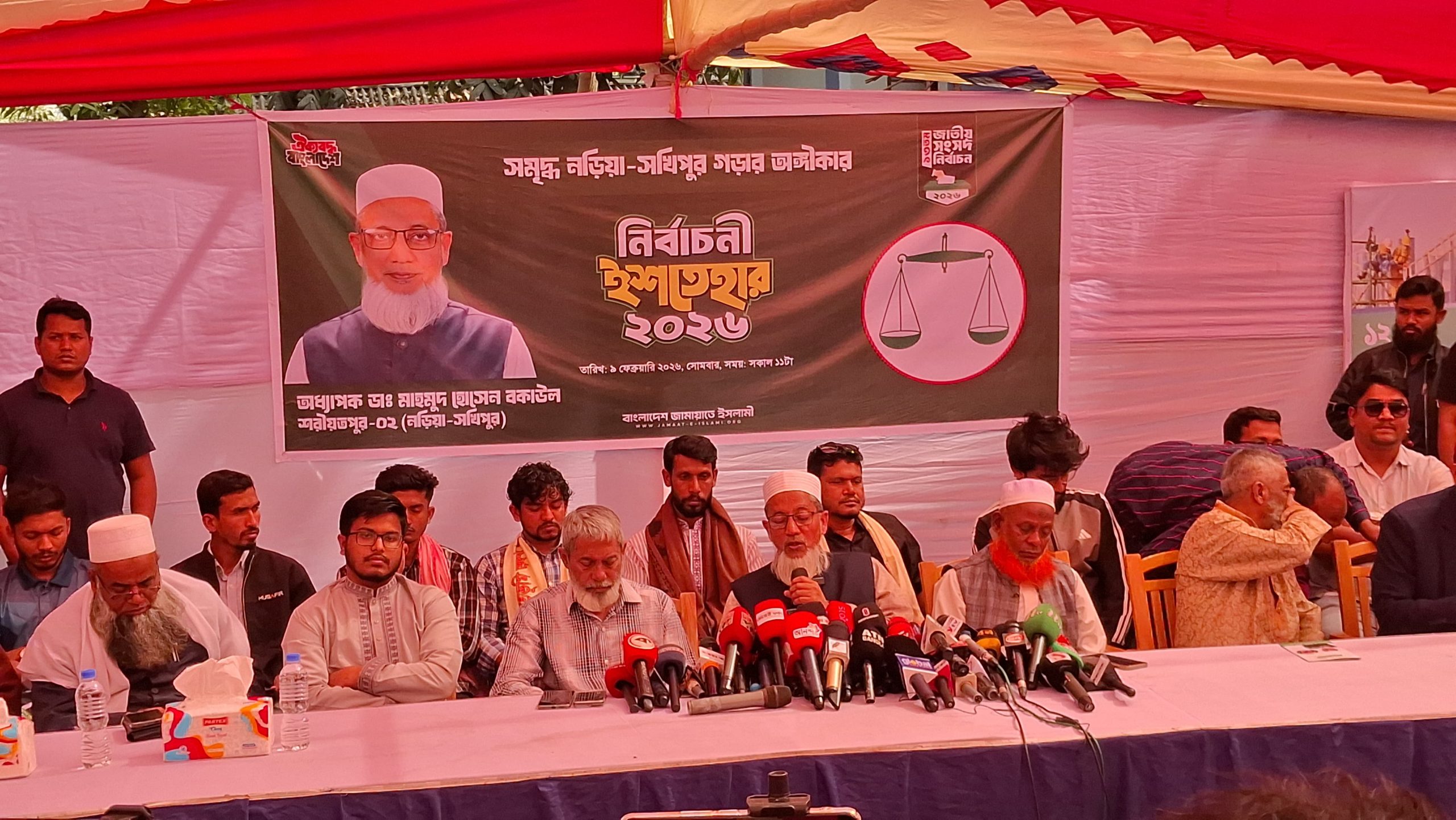
For the 13th National Parliamentary Election, Professor Dr. Mahmud Hossain Bakoul, nominated by Bangladesh Jamaat-e-Islami for the Shariatpur-2 (Naria-Sakhipur) constituency, has announced his election manifesto. He stated that if elected, he will prioritize 14 key areas over the next five years.
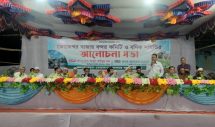
This morning (Monday) at 11:00 AM, Dr. Mahmud Hossain Bakoul presented the details of his 20-page manifesto, titled “Prosperous Naria-Sakhipur Development Pledge”, at his residence in Char Bhaga, Sakhipur.
In the manifesto, he outlined 14 priority areas:
1. Good governance, law and order, and public services
2. Food security
3. Healthcare and sanitation
4. Education: skill development and future preparedness
5. Social safety net
6. Economy, business, and investment
7. Social justice
8. Infrastructure and char (riverine) area development
9. Youth employment generation
10. Welfare of senior citizens and minority communities
11. Tourism and eco-parks
12. Welfare and skill development for expatriates
13. Sports and culture
14. Environment and climate resilience
At the beginning of the manifesto, he emphasized the establishment of Sakhipur Upazila Parishad to enhance administrative efficiency and public service delivery. Strengthening the Union Parishads with greater capacity, transparency, and resources to make them centers of local development was highlighted. He also proposed measures to improve public safety, resolve local disputes quickly, establish police outposts in remote char areas, simplify grievance redressal, and prioritize riverine communities.
He stated, “I aim to bring good governance to the doorstep of every citizen. My goal is to strengthen local government institutions, enhance law and order, and ensure citizen-friendly, corruption-free services.”
The manifesto also proposes modernizing agriculture and fisheries to be climate-resilient and farmer-friendly, ensuring food security, safeguarding farmers’ rights, and creating employment and sustainable local economies. Affordable, quality healthcare, nutrition, and safe water and sanitation will be ensured for every family in Naria and Sakhipur so that no mother, child, or senior citizen is deprived of medical services due to poverty or distance. It also includes plans to upgrade Naria Health Complex to 100 beds, fully operationalize a mother and child welfare center at Sakhipur Thana, and ensure adequate staffing at local health centers.
Education initiatives include filling vacant teaching positions, teacher training, and modern online education. Infrastructure and management of schools, colleges, and madrasas will be improved. Support for higher education will include establishing an agricultural university and special assistance for meritorious and underprivileged students. Vocational, technical, and digital skills development, as well as language training centers for expatriates, will be emphasized. Expansion of moral and value-based education will also be promoted.
Social security for poor, women-led households, seniors, disabled, and disaster-affected people will be rights-based and transparent. Accurate beneficiary listing, nutrition-focused aid, digital cash transfers, and emergency support during floods and river erosion will ensure a dignified life.
Local production- and employment-based economic development will be prioritized in Naria-Sakhipur. Agriculture, fisheries, and small businesses will receive support through easy loans, training, and market infrastructure. Initiatives include women and youth entrepreneur funds, agro-based industries, e-commerce expansion, and special economic zones leveraging the Padma-Meghna bridges. Corruption-free services and speedy approvals will be ensured.
The manifesto envisions a just, ethical, and value-based society free from fear, discrimination, and exploitation. Zero tolerance will be maintained against corruption, terrorism, drugs, and extortion. Ward-based arbitration, legal awareness, women and child protection, and religious and social harmony will foster a moral and corruption-free community.
Infrastructure development will focus on safe transport and sustainable facilities, including modern roads, bridges, culverts, and waterways, along with initiatives for the Naria Bridge and Meghna Bridge. Measures will address river erosion, dredging, and illegal sand extraction. Expanding education, healthcare, electricity, and digital connectivity in char areas will promote river-centric economic and environmentally friendly development.
Youth will be equipped with technical and entrepreneurial skills. Initiatives include technical and ICT training, startup support, easy loans, mentorship, and youth-led employment generation in agriculture and local sectors. Women’s skill development will transform youth into the driving force of development.
Inclusive and safe societies will be created for seniors, disabled, and minority citizens, with specialized healthcare, social protection, and legal aid expansion. Senior citizen centers will be established, ensuring equal rights and security for all. Community harmony will be strengthened through swift administrative protection, ensuring dignified coexistence.
Naria-Sakhipur will be developed as an eco-friendly tourism region along the Padma-Meghna river. Plans include river- and char-based tours, rural tourism, and eco-parks. Local culture and heritage will be integrated into tourism while creating youth employment and encouraging investment from expatriates and private sectors.
Expatriate workers will receive safe, skill-based, and exploitation-free migration support. Language and skill training, service and grievance centers, legal aid, and reintegration measures will be provided. Strict action will be taken against illegal recruiters and middlemen to protect expatriates’ dignity, safety, and development participation.
The manifesto also focuses on sports, culture, and moral education for fostering a healthy and responsible generation. Measures include zero tolerance for drugs, development of sports facilities, cultural centers and libraries, and safe recreation for children. Value-based youth leadership will enhance social participation.
Finally, Naria-Sakhipur will be transformed into an environmentally friendly and climate-resilient region through tree plantation, river and canal conservation, flood and erosion control, stopping illegal sand extraction, flood- and salinity-resistant agriculture, pollution control, renewable energy usage, and raising environmental awareness to ensure green, safe, and sustainable development.


Design & Devlopment : Ifad Technology


