
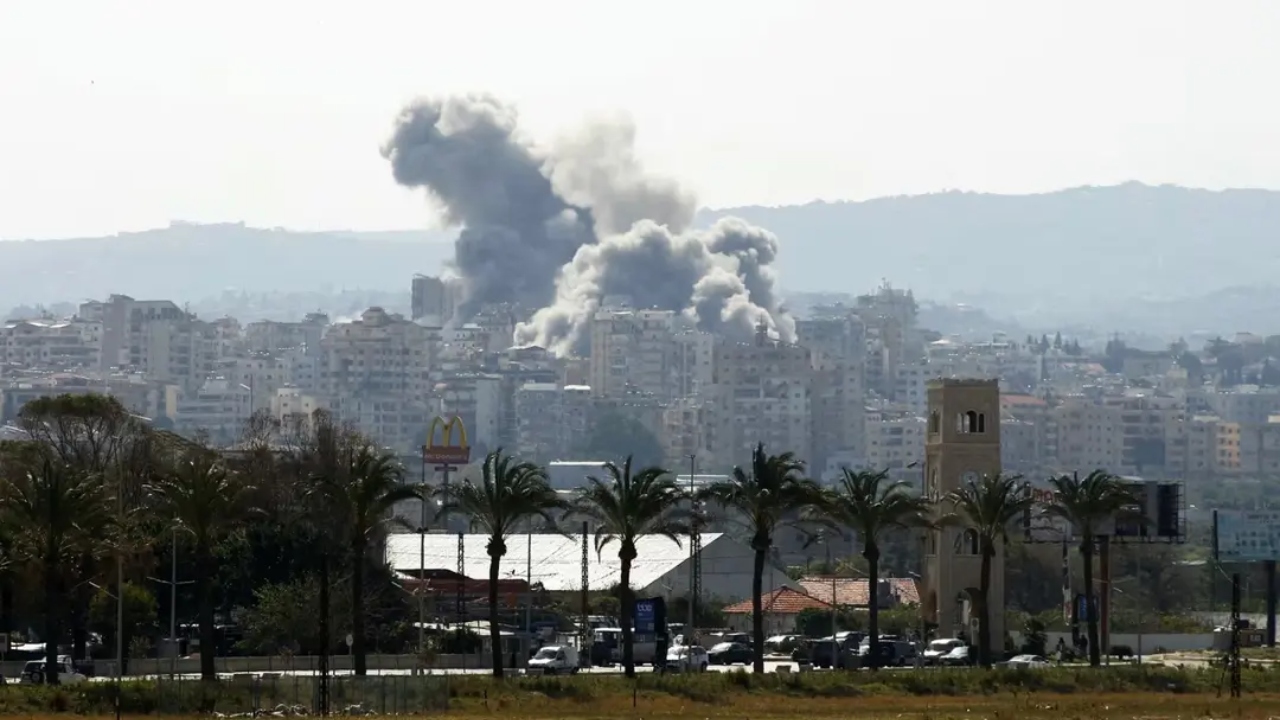
In a landmark diplomatic shift, Lebanon and Israel have commenced direct face-to-face negotiations in Washington D.C. for the first time in four decades. Mediated by the United States, the ambassador-level talks on Tuesday (April 14) aim to establish a framework for a permanent ceasefire and address the regional influence of Hezbollah.
Israeli Foreign Minister Gideon Sa’ar emphasized that the primary obstacle to peace is not the Lebanese state, but the disarmament of Hezbollah. “Our issue is with the militia, not the nation,” Sa’ar noted, adding that Hezbollah’s de-escalation is a prerequisite for normalizing bilateral ties.
The peace process faces an immediate internal threat as Hezbollah has officially rejected the Washington dialogue, vowing to ignore any resolutions produced by the summit. Analysts point to a significant power gap, noting that the Lebanese central government currently lacks the enforcement capability to disarm the group despite diplomatic commitments.
U.S. Secretary of State Marco Rubio characterized the talks as a “historic opportunity.” However, the diplomatic progress stands in stark contrast to the reality on the ground, where heavy shelling continues along the border following the escalation that began in late February.









Design & Devlopment : Ifad Technology


