
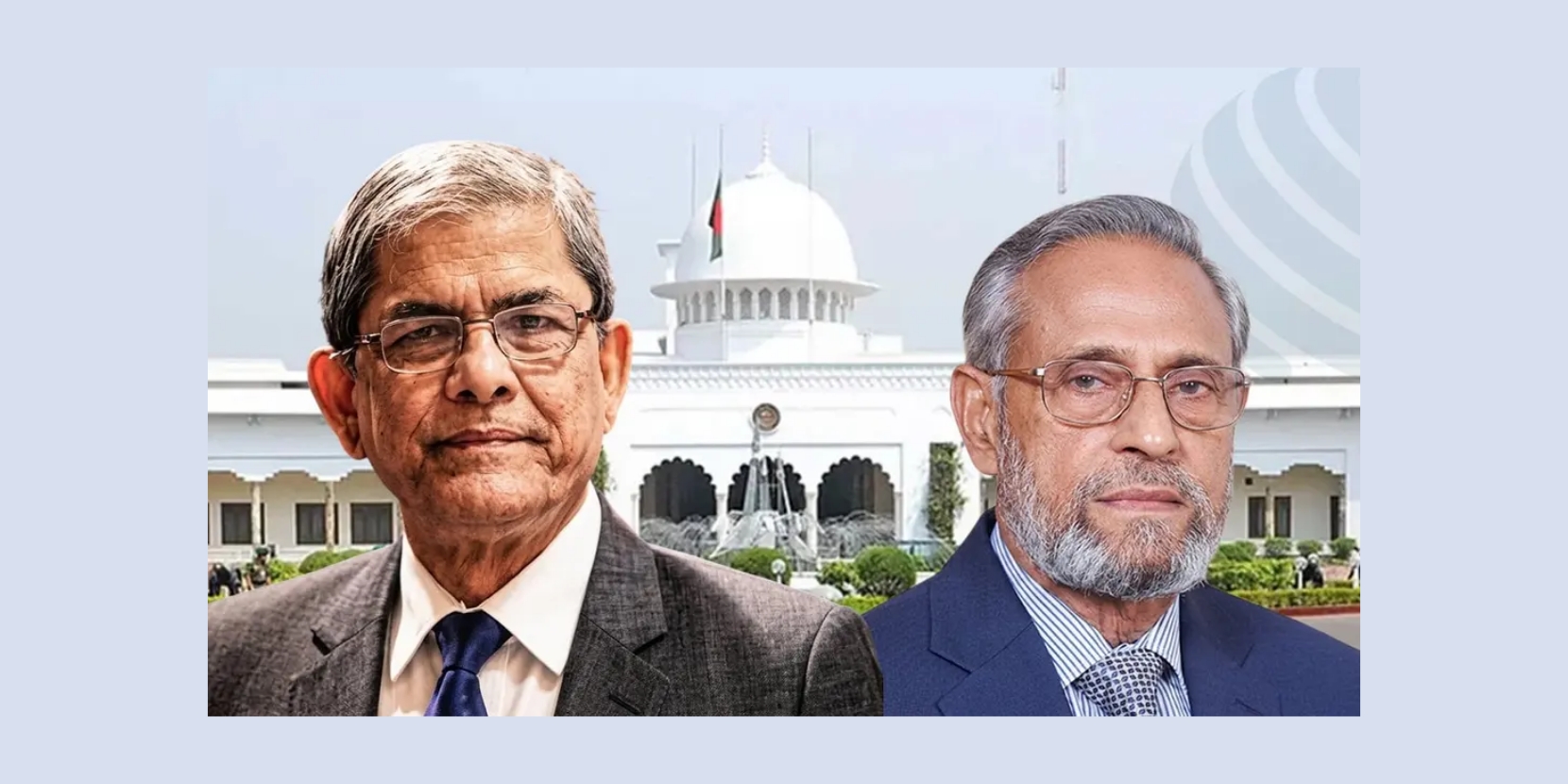
After a long gap of 35 years, Bangladesh is set to hold a presidential election featuring more than one candidate. The country’s 23rd president will be elected today, Thursday (August 20), through a direct vote by members of parliament at the Jatiya Sangsad Bhaban. The process began following the resignation of former President Mohammed Shahabuddin, in accordance with the Constitution and relevant laws.
This time, BNP candidate Mirza Fakhrul Islam Alamgir and Dr. Oli Ahmed Bir Bikram, the candidate of an 11-party alliance led by Jamaat-e-Islami, are contesting the election. With multiple candidates competing for the presidency after a long interval, the election is being viewed as politically and constitutionally significant.
After the parliamentary system was introduced, no competitive presidential election was held after 1991. That year, BNP candidate Abdur Rahman Biswas was elected president with 172 votes, while his rival, Awami League-backed Badruddoza Chowdhury, received 92 votes. In subsequent elections, candidates nominated by the ruling party were generally elected unopposed.
According to the schedule announced by the Election Commission, voting will take place today from 2:00pm to 5:00pm at the Jatiya Sangsad Bhaban. Members of parliament are the only voters in the election. There are currently 349 eligible voters, as one parliamentary seat is vacant, resulting in a slight difference from the full membership of parliament.
Under the Presidential Election Act, 1991, the Chief Election Commissioner will serve as the election officer and oversee the entire voting process. As parliament is not currently in regular session, the CEC has convened a meeting of MPs specifically for the presidential election in accordance with the law. The Election Commission also held the necessary consultations with the Speaker beforehand.
On the final day for submitting nomination papers, August 13, three nomination papers were submitted. Two were filed in support of Oli Ahmed and one in support of Mirza Fakhrul Islam Alamgir. All three nominations were declared valid after scrutiny. However, under the rules, when multiple nomination papers are submitted for the same candidate, one remains valid while the additional nomination is treated as cancelled. As a result, two candidates remain in the race.
Neither candidate withdrew their nomination on August 18, the final date for withdrawal. Therefore, voting will take place between the two candidates as scheduled today.
The Election Commission said vote counting will begin immediately after voting ends at 5:00pm. As there are multiple candidates, the candidate receiving the highest number of votes will be declared president. Following the count, the Chief Election Commissioner will formally announce the result.
A notable feature of this election is the nature of the ballot. According to the Election Commission, the voting process will not follow the conventional secret-ballot system. The names of the candidates will be clearly printed on the ballot, and the voting process will be visible to those present. As a result, there will be no scope for keeping secret which candidate an individual MP voted for.
The Election Commission has said that MPs will be allowed to remain present during both voting and counting. Bangladesh Television, the state broadcaster, has also decided to broadcast live the key stages of voting and the vote-counting process.
Chief Election Commissioner A.M.M. Nasir Uddin said that although there is limited practical experience within the commission because no competitive presidential election has been held for such a long period, the commission has completed the necessary preparations, rehearsals and training. He expressed hope that the election would be conducted transparently and fairly with the cooperation of all stakeholders.
Former President Mohammed Shahabuddin resigned on July 24, leaving the presidency vacant. The Cabinet Division issued a gazette notification on the same day regarding his resignation. The Election Commission subsequently initiated the process of electing a new president in accordance with the constitutional provisions.
Under Article 48(1) of the Constitution, the president is elected by members of parliament. The elected president will serve a five-year term after assuming office. The winner of today’s election will begin serving as the country’s president upon taking office.
Security and administrative preparations have also been made at the parliament complex ahead of the election. No form of election campaigning will be permitted inside the parliament building on voting day. The Election Commission said the election will not require significant additional expenditure; the main costs will be limited to arrangements for the MPs’ meeting, ballots and necessary stationery.
Held against the backdrop of the political realities that emerged after the mass uprising, this presidential election is attracting particular attention in the country’s political arena. After a prolonged period without a contested presidential election, the direct competition between two candidates in a vote by members of parliament makes today’s election more than simply a process for choosing a new president—it is also being regarded as a significant event for Bangladesh’s constitutional and political system.





Design & Devlopment : Ifad Technology


