
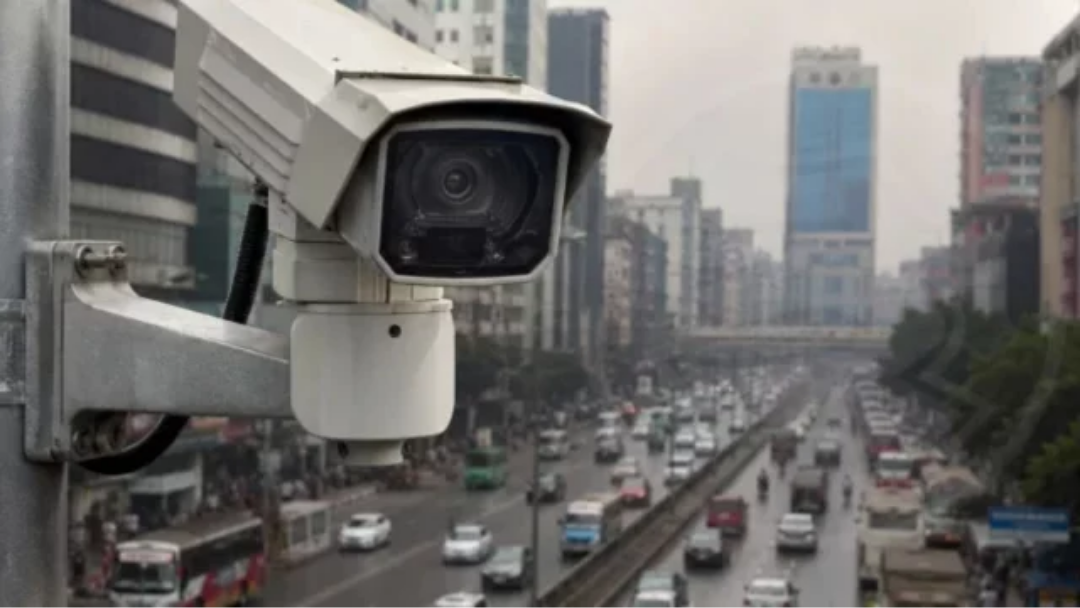
Artificial intelligence (AI)-powered cameras installed on the Dhaka–Chattogram Highway are already beginning to have a noticeable impact, with traffic violations dropping sharply just one day after the system was launched.
On August 18, the first day of operation, a total of 446 cases were filed for speeding and driving on the wrong side of the road. The number fell to just 42 cases on August 19—a decline of nearly 91 percent in a single day.
According to Highway Police data, 417 cases were filed for speeding on the first day. Of these, 397 were recorded in the Cumilla region and 20 in the Gazipur region. Another 29 cases were filed for driving on the wrong side of the road—23 in the Gazipur region and six in Cumilla.
The picture changed dramatically the following day. On August 19, only 42 cases were filed for speeding in the Gazipur and Cumilla regions, while no incidents of wrong-way driving were detected.
Police believe the sharp decline indicates that drivers are becoming more cautious and increasingly inclined to comply with traffic laws following the introduction of the AI-based monitoring system.
Highway Police oversees road safety and traffic management across the country through eight regional units. The AI cameras installed along the Dhaka–Chattogram Highway fall under the jurisdiction of the Gazipur and Cumilla regions. The Gazipur region covers the highway section up to Narayanganj, while the Cumilla region covers the stretch from Daudkandi to the Chattogram City Gate.
Highway Police Headquarters Additional Deputy Inspector General (Operations) Muntasirul Islam said the authorities would periodically assess whether compliance with traffic laws was improving and whether road accidents were declining.
“Discipline has already started returning to the highway. We hope the AI camera initiative will prove successful,” he said.
He added that the automated system leaves little room for human intervention.
“Violations are detected automatically, cases are filed automatically, and messages are sent to the concerned mobile phones automatically,” he said.
Under the Highway Police Capacity Enhancement Project, a total of 1,427 AI cameras have been installed along approximately 250 kilometres of highway from Signboard in Narayanganj to Chattogram City Gate. The cameras have been mounted on 490 poles on both sides of the highway.
The system is being monitored through one data centre and five monitoring centres. The entire project has cost more than Tk 1.42 billion.
The AI-powered cameras are capable of automatically detecting and recording a range of traffic violations, including speeding, wrong-way driving, dangerous overtaking, riding motorcycles without helmets, movement of three-wheelers, violations of traffic signs and signals, and illegal parking.
Under the Road Transport Act 2018, vehicles are not permitted to travel at speeds exceeding 80 kilometres per hour on highways. The law provides for a Tk 3,000 fine for driving on the wrong side of the road and a Tk 2,500 fine for speeding.
Drivers have also reported becoming more cautious since the cameras were introduced.
Bus passenger Kamrul Islam said reckless speeding had frequently caused accidents on the highway, but vehicle speeds appeared to have come down somewhat since the installation of the AI cameras.
Motorcycle rider Abdul Karim said, “I am driving more carefully because of the AI cameras so that I do not end up facing a traffic case.”
A.S.M. Ahmed Khokon, additional secretary-general of the Bangladesh Road Transport Owners Association, said he expected the AI camera system to produce positive results.
He said the association had issued a circular to all vehicles instructing drivers not to exceed 80 kilometres per hour.









Design & Devlopment : Ifad Technology


